
Website and Content Architecture.
Plan how your website is organised and how users move through it, so everything connects clearly and supports performance from the start.
Book a strategy call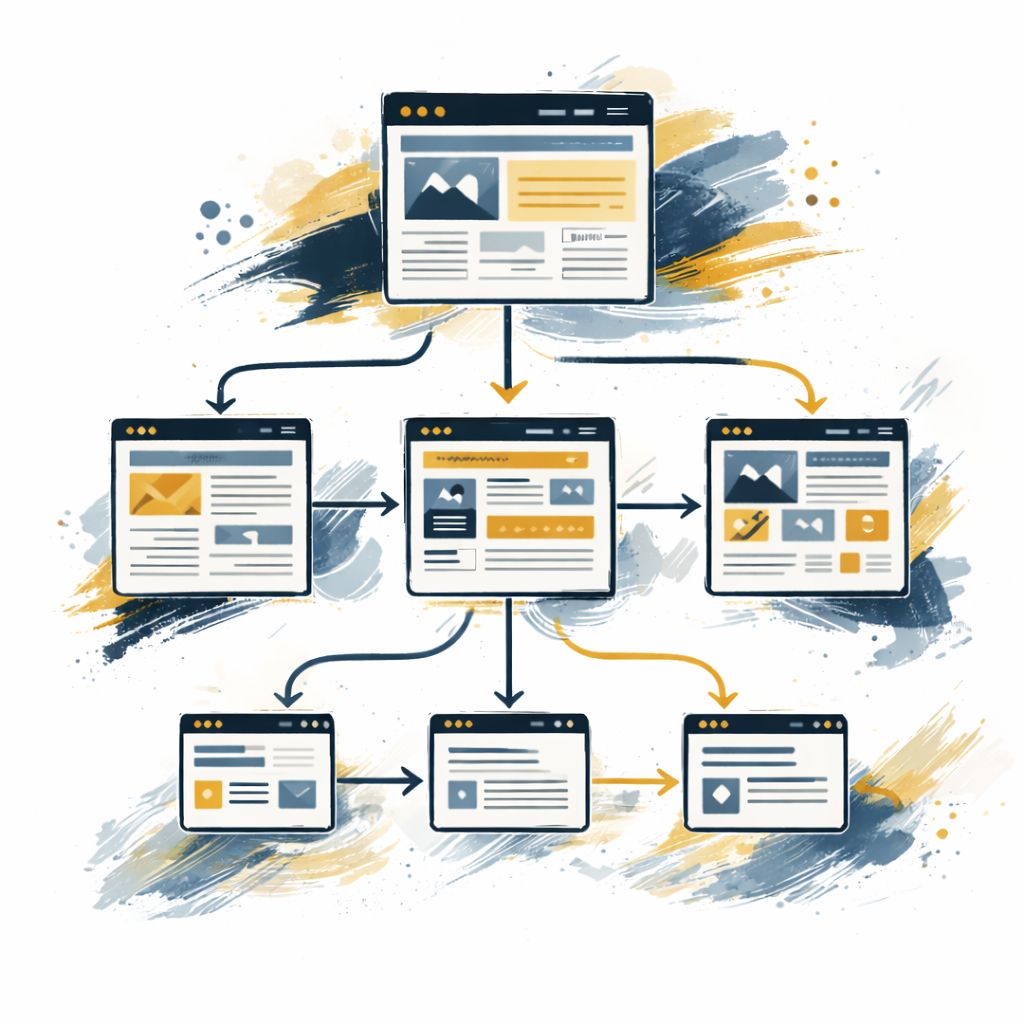
Structure affects how your website performs.
Most websites don’t fail because of design or content quality. They struggle because the structure behind them isn’t clear.
Pages get added without a defined hierarchy. Navigation becomes harder to follow. Content sits in the wrong places or competes for attention. As a result, users struggle to find what they need, and search engines struggle to understand what the business offers.
This isn’t a surface-level issue. It’s a structural one.
The structure behind a stronger website.
🧠 Website architecture is the system that organises your content, defines how pages connect, and guides how users move through your site. It connects user behaviour, search intent, and business goals into a structure that supports both understanding and decision-making.
💡 When you get it right, your website becomes easier to navigate, easier to scale, and better positioned to rank consistently in search. This also makes it clearer how content should be structured, added, and maintained as the site grows.
What needs to be defined upfront.
These decisions affect how the site is built, how teams work, and how content is added over time. Getting them right early prevents issues later.
1. Page structure and hierarchy.
We define the pages your site needs and how they should be organised. This creates a clear hierarchy that helps users navigate and helps search engines understand your content.
2. Navigation and user flow.
We define how users move through your site, from entry points to key actions. This ensures people can find what they need quickly and progress naturally towards a decision.
3. Content organisation.
We structure content around meaning, not just format. This ensures information is grouped logically, avoids duplication, and supports both clarity and discoverability.
4. Search-aligned structure.
We align your site architecture with how people search and how topics are understood. This improves visibility and ensures your content supports SEO from the ground up.
5. Scalability and future growth.
We plan your structure so it can grow without becoming disorganised. This makes it easier to add new pages, expand content, and adapt as your business evolves.
The difference structure makes.
The impact becomes clear once the site is in use. Problems surface quickly when structure is off, and improvements are immediate when it’s resolved.
Where structure typically breaks down.
When structure no longer supports how the business has grown, it often shows up as:
- ❌ Pages competing for the same purpose.
- ❌ Navigation that feels cluttered or unclear.
- ❌ Content that’s difficult to find or duplicated.
- ❌ SEO performance that doesn’t reflect the quality of the offering.
- ❌ Teams unsure where new content should sit.
At this stage, the issue isn’t adding more content. It’s rethinking how everything is organised.
What changes when it’s done properly.
When your website and content architecture are defined clearly, it leads to:
- ✅ Users finding what they need faster.
- ✅ Navigation becoming intuitive, not forced.
- ✅ Content supporting decision-making, not just information.
- ✅ Search engines understanding and indexing your site more effectively.
- ✅ Your site becoming easier to manage and scale.
Better structure improves how the site works for users, search engines, and internal teams.
When to do this work.
This work provides the foundation everything else depends on. It is most valuable:
Frequently asked questions about website and content architecture.
Get clear answers to common questions around structuring your website and organising content so everything connects and supports performance.
Website and content architecture is how pages, content, and navigation are organised across your site. It defines how users move through the site, how information is grouped, and how search engines understand what each page is about.
Website structure refers to how pages are arranged and linked. Information architecture focuses on how content is organised, labelled, and grouped so users can find and understand it more easily. Both work together to shape the overall experience.
Search engines rely on clear structure to crawl, interpret, and rank your content. A well-organised site helps search engines understand page relationships, improves indexing, and ensures your most important pages are easier to find and prioritise.
Website structure directly impacts how easily users can navigate and find what they need. Clear structure reduces friction, improves flow between pages, and helps users move towards decisions without confusion or unnecessary steps.
A strong structure typically includes:
- Clear page hierarchy.
- Intuitive navigation.
- Logical content grouping.
- Defined page roles.
- Internal linking that supports movement and discovery.
Each element works together to create a more usable and scalable site.
Website architecture should be defined before design and development begin. It is also important during redesigns, restructures, or when a site has grown without a clear structure and becomes harder to manage or scale.
Poor structure often leads to:
- Users struggling to find key information.
- Pages competing or overlapping in purpose.
- Weak SEO performance.
- Duplicated or misplaced content.
- Difficulty scaling or updating the site.
These issues tend to compound as the site grows.
It depends on how your current structure is performing. If the core hierarchy and organisation are unclear, a restructure may be needed. If the foundation is solid, targeted improvements to navigation, content grouping, or page roles may be enough.
Start with a clearer website structure.
Send an enquiry with a few details about your website and we’ll outline the most useful next steps for improving its structure and organisation.