

Content Strategy Services.
Create a clearer direction for the content your website, SEO, and wider digital presence need to support search, evaluation, and enquiry.
Book a strategy call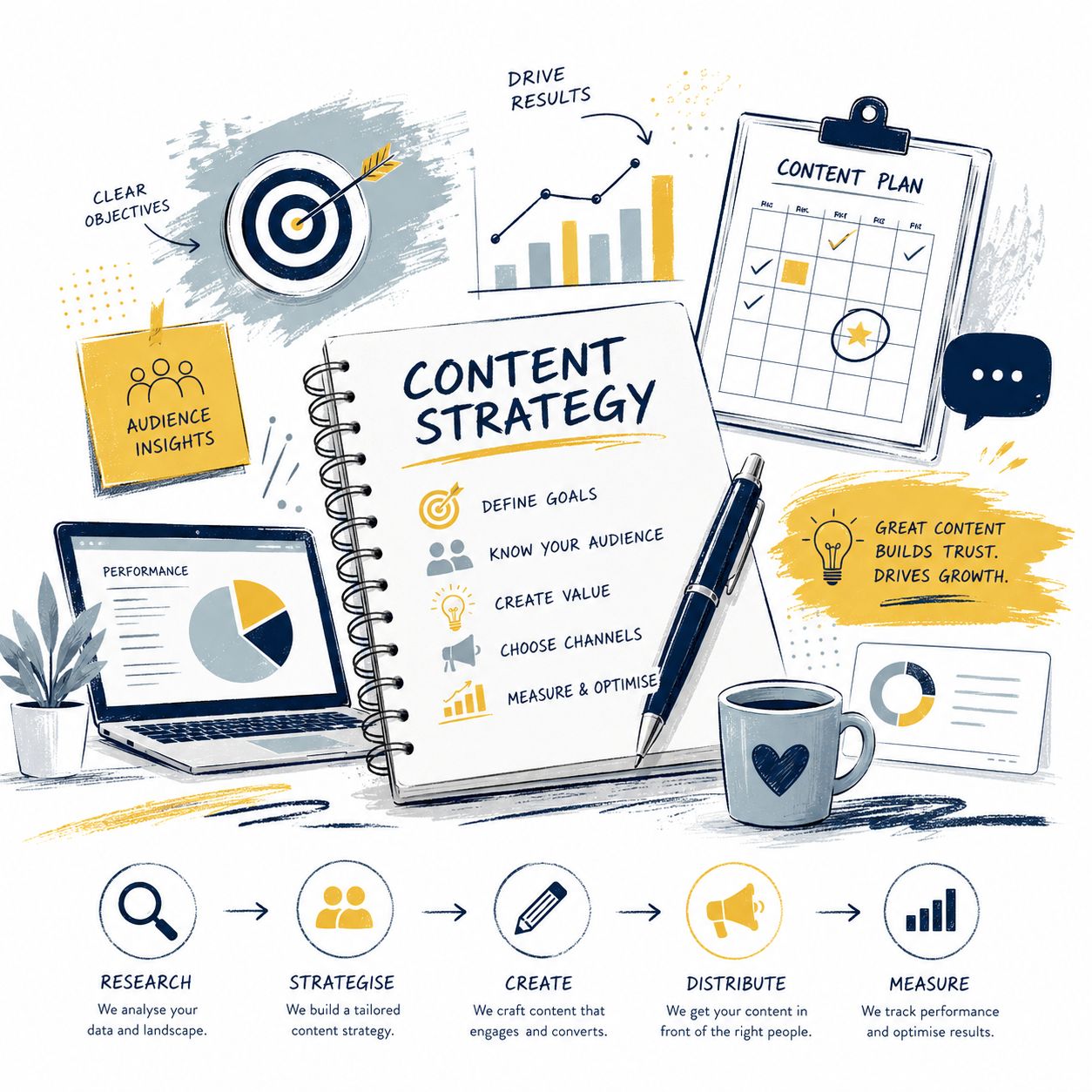

Build content around search, evaluation, and enquiry.
Content works better when every page and asset has a clear role. A lot of businesses create content because they know they need to stay visible. The problem is that visibility alone does not create a stronger digital presence. Content needs direction, structure, and a clear reason to exist.
Without that, teams end up producing articles, pages, campaigns, and resources that do not connect properly. Some content attracts traffic but does not support enquiry. Some explains the offer but misses search intent. Some is useful on its own but disconnected from the wider website.
Content strategy gives that work a clearer foundation. It defines what needs to be created, why it matters, how it connects to the website, and how it supports the way people search, evaluate, compare, and decide.
Related content strategy guides.
These guides go deeper into the planning work behind content strategy, from setting the overall direction to turning that direction into a practical content plan and calendar.


What content strategy needs to define.
A useful content strategy starts by understanding what already exists, what is missing, and where content can support clearer decisions. We review your current pages, search opportunities, audience needs, message gaps, and commercial priorities so each recommendation has a clear reason behind it.
Review existing content and performance.
Before planning new content, we look at what is already there. That includes pages that attract traffic, content that supports enquiry, articles that no longer fit, and gaps that make the website harder to navigate or understand.
Connect content to search intent.
Content needs to match what people are looking for and what they need before they make a decision. We map topics, questions, and page opportunities around intent so each piece has a clearer role in the wider site.
Define page and content roles.
Not every page or article should do the same job. Some explain the offer. Some build trust. Some answer specific questions. Some support conversion. We define those roles so the website works as a connected structure, not a collection of isolated content.
Align messaging across content.
Strong content needs a consistent message behind it. We help make positioning, audience needs, and proof points clearer across website pages, articles, campaigns, and resources, so content supports the same strategic direction.
Build a practical content roadmap.
A strategy only helps if it turns into usable priorities. We organise recommendations into a content roadmap that shows what to update, what to create, what to consolidate, and what to measure next.
How we build a content strategy.
The process turns research into decisions your website and content team can use. It starts by understanding the role content needs to play, then turns that into clearer priorities for pages, articles, resources, and ongoing updates.
Clarify the commercial goal.
We start with the outcome the content needs to support. That may include better enquiry quality, clearer service pages, stronger search visibility, or a website structure that helps people find the right information faster.
Understand the audience and decision context.
Content works when it reflects how people evaluate the business. We look at audience questions, objections, awareness levels, and the information people need before they are ready to enquire.
Review the website and existing content.
Existing content often contains useful material, but it may be buried, duplicated, outdated, or disconnected from current positioning. We identify what to keep, improve, merge, or remove.
Map search and page opportunities.
We connect audience needs with search intent, page roles, and content gaps. This helps define whether a topic needs a service page, article, guide, comparison page, or supporting resource.
Prioritise the roadmap.
Not every content idea deserves equal attention. We organise the work by strategic fit and commercial value, then use search opportunity and effort to set the order.
Set review points.
Content strategy needs a way to stay useful. We define what should be measured, when content should be reviewed, and where updates may be needed as the business, search behaviour, and website structure change.
Frequently asked questions about content strategy services.
Clear answers to common questions about content strategy, content planning, and how strategic content direction supports a stronger digital presence.
Why do you need a content strategy?
You need a content strategy when content decisions have become disconnected from your website, audience, search opportunities, or commercial goals. A clear strategy defines what to create, update, consolidate, or remove, so content has a stronger role across search, evaluation, and enquiry.
What are the 7 steps in creating a content strategy?
The seven common steps are to clarify goals, review existing content, understand audience needs, map search intent, define topics and page roles, build a roadmap, and measure performance. The useful part is turning those steps into practical decisions your team can apply.
What is a full funnel content strategy?
A full-funnel content strategy plans content around different levels of audience awareness and decision-making. It helps people understand the problem, compare options, evaluate your offer, and know when to enquire, rather than treating every piece of content as an awareness asset.
What are content pillars?
Content pillars are core themes that organise content around important topics, audience needs, and service areas. They help keep content focused, but they work best when connected to search intent, page structure, and clear commercial priorities.
What is the difference between content plan and content strategy?
A content strategy defines the direction behind content, including goals, audience needs, search intent, messaging, page roles, and priorities. A content plan turns that direction into a practical schedule of topics, formats, deadlines, owners, and publishing activity.
Start with a clearer content direction.
Send an enquiry with a few details about your website, current content, or the areas that feel unclear. We’ll look at what you share and outline the most useful next step.