

If you’re still struggling to get your marketing content calendar off the ground, you’re not alone. Developing a content marketing calendar that is both achievable and effective is a challenge many marketers face. But regular content creation is crucial for growing your business. If you’ve been coming up with topics on the fly and publishing at an ad-hoc rate, then it’s time to get organised.
So, where do you begin? Is there a foolproof way to create an effective marketing content calendar? In this article, we’ve compiled all the best tips and tricks to help you create a content calendar that will keep you on schedule and help you (or your team) deliver the consistent content your business needs for it to grow.

What is a marketing content calendar?
As the name suggests, it’s a way to keep track of your marketing content publishing schedule. Marketing content calendars usually include content topics alongside deadlines and publishing dates and times. Sometimes the term marketing content calendar can be used interchangeably with an editorial plan. However, the latter focuses more on the big-picture content strategy, whereas a marketing calendar (which confusingly, you can also refer to as a marketing editorial calendar) will specifically outline publishing dates and times for all your digital content.
From small startups to enterprise-level, businesses of all sizes can use content calendars. Basically, any brand that publishes any type of content can benefit from having a marketing content calendar in place. It’s the first step toward keeping your content creation efforts organised and on track.
What is the difference between content plan and content calendar?
You might also hear the words content plan and content calendar used interchangeably, but they’re actually quite different. Content plans are more high-level strategy documents that include the overarching content strategy, goals, and objectives. Content calendars are more tactical documents that include specific tasks like topics, publishing dates and times, and content formats.
You need a content plan to lay out the direction of your content creation, but a content calendar is what will help you take action by mapping out specific content ideas and when to publish them.
Before you can create either of these, however, you need to have a content strategy in place. What is a content strategy, you ask? To sum it up, a content strategy is a roadmap for all your content efforts. Most importantly, it outlines the goals you want to achieve with your content and how you’re going to get there. Your content strategy guides your content plan, which you can then use to create your marketing content calendar. With all these different terms being thrown around, it can get confusing. Here is a simple way to look at it:
Step 1: Create a content strategy
Step 2: Create a content plan
Step 3: Create a content calendar

How to create a content strategy
Since you can’t create a marketing content calendar without a content strategy, let’s give a brief overview of how to create one.
- Define your goals. The first step in any content strategy is setting your goals. What do you want to achieve with your content? You should have SMART (specific, measurable, achievable, relevant, and time-bound) goals to help you stay on track.
- Define your audience. You need to determine your target audience and look closely at their needs. What kind of content do they engage with? How can you meet those needs with the content you create?
- Brainstorm your strategy. Once you’ve identified your goals and audience, it’s time to create a content strategy that will help you achieve both. This step involves mapping out how you want to achieve your content goals. You’ll need to consider content topics, the types of formats you want to use (blogs, videos, social media updates, etc.) and the messaging you want to use.
Finally, once you take all these steps, you can create your content plan and subsequently, your content calendar. When done well, a content calendar will help keep both your team and your audience in sync. It outlines when and where each piece of content will be published and helps with planning future content that is in line with your goals. Voila!
What should be included in a marketing content calendar?
Every marketing content calendar should include these key elements:
- Content topics. Deciding these in advance will cut down on delivery times, since your writers won’t be trying to think up new topics right before every deadline.
- Type of content. You should decide in advance the type of content you plan to publish – long-form, short articles, video content, etc.
- Publishing date and time. It wouldn’t be much of a calendar without this information. You need to know when you plan to publish content so that you can manage deadlines.
- Publishing platform. Include where you plan to publish the content. Is it your company website blog? Or a social media business page?
What are the benefits of a content marketing calendar?
If you want to execute a successful marketing strategy, a marketing content calendar is essential. As a marketing agency ourselves, we use content calendars to help our team deliver high-quality content on time, supporting our brand message and overall marketing strategy. Let’s get into some of the reasons why it’s indispensable:
1. To create and follow a marketing strategy.
If you create and publish content ad hoc, it may not always reflect your marketing goals. When you sit down to plan your marketing content calendar in advance, it allows you to align your content with your overall marketing strategy. This helps you to create content with a purpose.
2. To publish content consistently.
Have you ever been on a company website and noticed that they haven’t updated their blog in months? Sometimes work accumulates and certain tasks fall by the wayside. Quite often, the first casualty is the company blog. While it’s understandable WHY it happens, it doesn’t give a great first impression to site visitors. When you have an actionable content publishing schedule in place, it reduces the risk of this happening.
3. To minimise deadline stress.
Quick – I need a 3,000-word article on [insert obscure topic] by the end of the day! Last-minute deadline surprises can be stressful, especially if you’re also trying to juggle other important tasks. When you have a content publishing schedule in place, it’s much easier to prioritise and manage the workload. This cuts down on rushed writing and leads to higher-quality content.

4. To reduce repetitive content.
When your content is restricted to one particular industry, it’s natural that you may accidentally repeat topics in your content. Planning your content topics in advance gives you a bird’s eye view of your content, and cuts down on repetitive and unimaginative topics.
5. To boost creativity.
Setting dedicated time aside to decide topics, gives breathing space for your content creators to let their creativity flow. Without the pressure of an urgent deadline, they can brainstorm and research topics in advance, and identify key areas of your marketing strategy that you can improve.
6. To enable more collaboration.
Marketing content calendars are a great opportunity for your team to collaborate and share ideas. The best kind of calendar is one that can be accessed by everyone involved in the creative process, facilitating idea sharing. If you are creating content for a third party, then a content calendar also gives them an opportunity to provide input.
How do you create a marketing calendar?
Creating a successful content calendar is relatively straightforward, but it does require careful planning. Here are the steps you need to take.
1. Establish your content strategy
When you’re trying to decide the content you want to publish, it’s important to know what your marketing goals are. Are you trying to raise more brand awareness? Are you trying to get more clients? Or do you want to improve your Google ranking? If you’ve already created a content strategy, then you know what your goals are and you have hopefully set out tangible steps to achieve them. This will allow you to plan your content accordingly.
Once you’ve established your content goals, it’s time to start thinking about the topics you want to cover. Looking at competitor websites and industry blogs is a great way to brainstorm topics. Another excellent way to come up with ideas is to brainstorm with your team. They likely have valuable insights into what kind of topics engage your potential clients. But most importantly, try to focus on topics that will be useful or interesting to your target audience. One of the best ways to determine this is to perform some in-depth keyword research, which we’ll get into in the next step.
2. Start keyword planning
Website content can serve a few purposes; sometimes it’s to dispense information or to sell or promote a particular product or service. But if it’s not search engine optimised, it’s quite possible it will fall off the search radar and no one will get to see it. This is why keyword planning is essential when you are deciding your content topics.
But keyword planning has another benefit – it helps you discover topics that will be interesting to your target audience. What do people want to know? What would they like to read about? Which information do they need? When do they search for this information?
When you figure this out, you can use related keywords as a guide to planning your content and even when to schedule each topic. Some things may be obvious – searches for “gift ideas” shoot up when we’re approaching the holiday season. Other trends may be less apparent and keyword research might reveal some insights you hadn’t considered.
Once you have pinpointed some topics, you can match them with the content goals outlined in your strategy and use this information to create a content plan. This plan will then form the basis of your content calendar.

3. Determine your publishing channels
Once you have a plan in place, it’s time to figure out which channels are the most efficient and effective for publishing your content. Will you be publishing blog posts, videos, podcasts, infographics, or something else?
When deciding which channels to use, consider the platforms that work best for your target audience. Do they prefer written content or visuals? Does their preferred platform favour video or audio? Hopefully, this has already come up during the strategy phase and you can use this information to help guide your decisions.
4. Decide on your content marketing schedule
How you time your content is important. As mentioned before, certain search queries will spike at certain times of the year. But there are other considerations too. You might want to schedule content according to your marketing initiatives or based on the length of time it takes to create certain content types. You’ll need to decide how often you want to publish content, and it’s best to be consistent. You can always adjust your frequency after assessing how well the content is performing.
Different channels may also require different frequencies and posting schedules. If you’re publishing on social media, then you might be wondering how to create a content calendar for social media marketing. Each platform has its own optimal publishing schedule, so it’s best to try to match this frequency. According to research performed by the social media management platform Hootsuite, these are the ideal post frequencies for your social media marketing calendar:
- Instagram: 3 to 5 times per week.
- Instagram Stories: 2 times per day.
- Twitter: 2 to 3 times per day.
- Facebook: 1 to 2 times per day.
- LinkedIn: 1 to 2 times per day.
- TikTok: 3 to 5 times per week.
- Pinterest: At least 1 time per week.
- Google My Business: At least once per week.
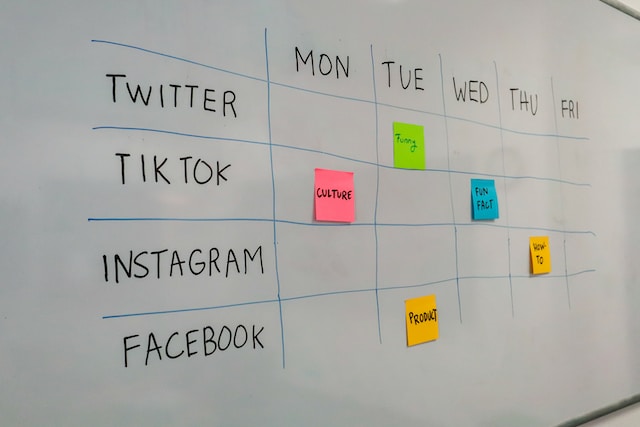
5. Fill and share your calendar
The time has come! Once you’ve decided on your content marketing schedule, it’s time to fill in the details. Start by mapping out all of the pieces of content you want to create during the designated time period and add them to your calendar. The days of paper calendars are far behind us, so it’s highly recommended that you create your content calendar digitally. There are many free and paid tools available to help you do this. If you’re wondering: “what can I use to create a content calendar,” Here are some popular tools:
- Asana. Asana is a useful tool if you want a simple, accessible approach to content planning. It helps you coordinate teams, organise deadlines, and keep track of projects with a range of calendar views.
- Monday.com. Monday.com acts like a virtual command centre for content management. Its timeline feature offers a bird’s-eye view of your content strategy, while automatic reminders keep everyone in the loop.
- Trello. Trello is both simple and flexible. Using a Kanban system, Trello makes visualising your content pipeline easy. Just create boards, set due dates, and move cards along as content gets ready for publishing.
- CoSchedule. Designed for marketers, CoSchedule is a perfect solution for busy content teams. It lets you map out your entire strategy, keep track of project status, and even plan your social media posts, all on a single platform.
- Google Sheets. Google Sheets might be a basic spreadsheet tool, but it’s surprisingly handy for content calendar creation. With its real-time collaboration and customizable templates, you can design, share, and update your content plan quite easily.
6. Measure its effectiveness
The only way to truly know if your content calendar is working for you and your business is to track the results. To do this, you need to look back at your content strategy. What were the goals of your content? How will you evaluate whether or not you achieved them?
For example, if your strategy was geared towards lead generation, then you can track the number of leads generated through each piece of content. You can also measure engagement, such as click-through rate, time on page, and shares.
If you created an SEO content calendar with the intention of boosting traffic to your website, then you need to focus on KPIs that measure organic rankings. This way, you can track whether or not your content is improving your SEO performance.
By keeping track of these metrics, you’ll be able to identify what content is performing well and what you need to improve or remove altogether. If something seems like it’s not working, then it’s usually best to adjust course, rather than stick with an ineffective plan. Don’t be afraid to try new things and learn from your mistakes. That’s how you’ll find success in the long run!

5 tips for creating an excellent digital marketing content calendar
We’ve covered the basics of how to create a digital marketing content calendar. If you want to go the extra mile and create an outstanding calendar, here are some additional handy tips.
1. Listen to your audience
The purpose of content is to engage with your audience, so you need to know what they’re into. Who is your ideal buyer and what are they talking about? How do your customers interact with your website? Use your website traffic analytics to build a snapshot of your customers and what they look for when they visit your website. Do you have an article that proved extremely popular? Use this information to plan your future content.
2. Publish regularly
Why is this important? Google’s algorithm uses many indicators to rank websites, such as keywords and backlinks. But it also looks at content freshness. If someone has a pertinent question for Google, they usually want the most up-to-date results. This is even more true for people looking for information on current events and trending topics. That said, it equally applies to someone asking Google, “what’s the best smartphone for taking photos?” or searching “best content marketing agency”.
3. Allow for flexibility
Look at the calendar as a detailed guide more than a rigid schedule. It’s important to have clear deadlines to create accountability. But life around us happens, so you need to factor in changing circumstances and current events to keep your content relevant. Imagine if businesses stuck to their early 2020 publishing content schedules and pretended the pandemic wasn’t happening. Ignoring current events makes content appear stale, so keep an eye on trends. If you need to update your content schedule in the process, then do it.
4. Keep evergreen content at hand
Evergreen content is called evergreen for a reason – it’s always relevant. This means that it provides information people will always be looking for, no matter what’s going on in the world. This type of content is perfect for filling the gap between more on-trend topics and people who are likely to keep coming back to it long after it’s been published. Mixing up evergreen and trending topics optimizes opportunities for you to gain traffic to your site. It can also save you time when there are delays to your publishing schedules.
5. Repurpose existing content
Sometimes old articles get out of date, or they just don’t match your current brand message or tone of voice. If you find this is the case with older articles on your website, you can simply repurpose and update the content instead of scrapping it completely. This keeps your website content relevant. You can also use it to create content in different channels, without starting from scratch. For example, you can turn an older blog article into a social media post during busy schedule periods.

Need help with your marketing content calendar?
If you’re feeling overwhelmed by the process of keeping up with your content calendar, don’t worry – help is at hand. Working with an experienced content marketing agency can help you plan and manage your publishing schedule, keeping everything on track.
Here at VAMS, our team of writers and content strategists can take the load off your shoulders when it comes to creating content. We know how to produce high-quality content that meets tight deadlines. Get in touch today if you’d like help with your content calendar. We look forward to hearing from you!
Frequently asked questions (FAQs)
Here are some of the most frequently asked questions about marketing content calendars.
How do you create a B2B content calendar?
Creating a B2B content calendar starts the same way as any other content calendar. Start by trying to understand your audience’s needs and identify common topics that are relevant to them. In this, your audience will be slightly different from a B2C content calendar, as you will need to tailor your content towards the people who make the purchasing decisions within their business. This includes company executives and department heads among other decision-makers. From there, you can follow the same process as creating a B2C content calendar.
What is an SEO content calendar?
An SEO content calendar is a scheduling tool that organises and plans content creation and publication with a focus on search engine optimization. Most marketing content calendars include a heavy SEO element. An SEO content calendar specifically is designed to drive traffic to your site.
How does a content calendar contribute to SEO?
Google loves fresh content. It’s one of the major factors when it comes to deciding which websites should be featured in search engine results. This means that if you have a content calendar, you can regularly publish interesting and relevant content that will help your site rank higher in the SERPs. Plus, when you create a piece of content, you can link to other pieces of content on your site or around the web, creating a network of links that search engines can follow. This also helps your website show up higher in search engine results!
How to create a content calendar as an influencer?
Creating a content calendar as an influencer is quite similar to creating a content calendar for a business. However, when it comes to SEO, influencers need to focus more on emerging trends specific to the platform they are using. Just like Google, every social media platform has its own search algorithm, and you’ll need to tap into that to ensure your content is seen by the right people. Social media moves quickly, so a little extra flexibility is required when creating an influencer content calendar. You’ll need to monitor trends very closely and be prepared to pivot as needed.