

Key takeaways.
- Branding shapes perception before people have the full picture.
- People do not just buy products. They buy the meaning, confidence, and social cues attached to them.
- A phone, pair of trainers, or supermarket product can carry assumptions that go far beyond the product itself.
- Brand value is not only about quality. Trust, familiarity, and identity can change what people choose and what they are willing to pay for.
- Businesses do not get to opt out of positioning. If your signals are unclear, the market will fill in the gaps.
- At VAMS, strong brand positioning and messaging starts with making sure people reach the right conclusion before they get lost in the details.

Branding does not wait for the full explanation. People form opinions quickly, often before they have used the product, compared the details, or understood what sits behind the name. That is why branding and positioning are vital. Together, they shape what people notice, what they assume, and where they place a brand in their mind.
A strong brand gives people cues they can understand quickly. Clear positioning makes those cues lead to the right conclusion.
Brand choices send signals before people compare details.
People like to think they judge brands carefully. Often, the impression forms much faster.
A phone, watch, jacket, or laptop can suggest something before anyone looks closely. The assumption may be incomplete, or even wrong, but it still shapes what people expect next.
That is what many businesses underestimate. Branding is not just how something looks. It affects whether a brand feels credible, premium, outdated, specialist, accessible, or hard to understand.
Those signals come from the brand itself, the category it sits in, and what people already associate with similar choices. It is why branding and positioning need to work together. Branding creates recognition. Positioning gives that recognition a clear place in the market.
Trainers show how fast perception changes.
Few everyday products carry social meaning as visibly as trainers. The same outfit can feel different depending on the pair someone chooses.
Some brands lean into sport heritage. Others suggest minimal taste, streetwear knowledge, luxury, or cultural fluency. The product still has a practical role, but the brand changes what people read into the choice.
That is why trainers work so well as a branding example. Research into sneakerhead culture connects trainers with expression, status, and community. The value is not only in the material product. It is also in what the pair helps someone communicate.
This helps explain why people sometimes pay more than the functional need alone would justify. They are not just buying footwear. They are buying the feeling attached to the brand.

When brand meaning starts shaping judgement.
Brand meaning is useful because it helps people choose faster. The uncomfortable part is that it can also make people judge faster.
A brand can give someone confidence, belonging, or a sense that a choice reflects who they are. The same mechanism can also make a different choice feel less desirable, even before anyone has looked at the product properly. That does not make every brand-led decision irrational. It shows how closely perception sits next to identity.
People often pay for how a brand makes them feel, not just what the product does. That is why someone may spend more on trainers, a phone, or a jacket when the emotional value feels worth it.
For businesses, the lesson is simple. Brand perception does not stay separate from the offer. It affects how people interpret the quality, relevance, and credibility of what is being sold. If the brand feels unclear, the offer can start to feel unclear too.
Similar products can carry very different value.
Supermarkets make this easy to see. In UK retail, products sold under a retailer’s brand are usually called own-label products. Tesco Finest is a familiar example. In academic and marketing research, the term private label is often used instead.
The point is simple. The name people see is not always the manufacturer behind the product. Sometimes the visible brand is the retailer’s, and that name shapes how the product is judged.
Own-label has also moved well beyond budget shelves. The Grocer reported that own-label sales now account for more than 50% of grocery volumes across Europe’s major markets, including the UK. That suggests shoppers are more willing to choose beyond the traditional branded name when quality feels close enough.
A study on private labels and national brands makes the perception point even clearer. People preferred private-label products in blind tasting, but preferred national brands when the brand was revealed. The name changed how the product was experienced.
This does not make branded products fake value. It means brand value can come from trust, familiarity, and the confidence people feel when they recognise the name.

If you do not define the position, the market will.
People start categorising a business long before they speak to anyone. They look at the website, service pages, case studies, language, structure, and overall presentation. From there, they start deciding whether the business feels credible, relevant, premium, specialist, or unclear.
When those signals conflict, people fill in the gaps themselves. The business may have strong expertise, but weak positioning can make that expertise harder to recognise.
A confusing website can make the offer feel difficult to understand. Vague messaging can make a capable business feel less distinctive. Inconsistent content can make people question whether the brand knows what it wants to be known for.
That is where a clear brand messaging framework helps. It gives the business a consistent way to express its value, sharpen its positioning, and reduce the assumptions potential customers have to make.
Brand recognition is not enough without clear positioning.
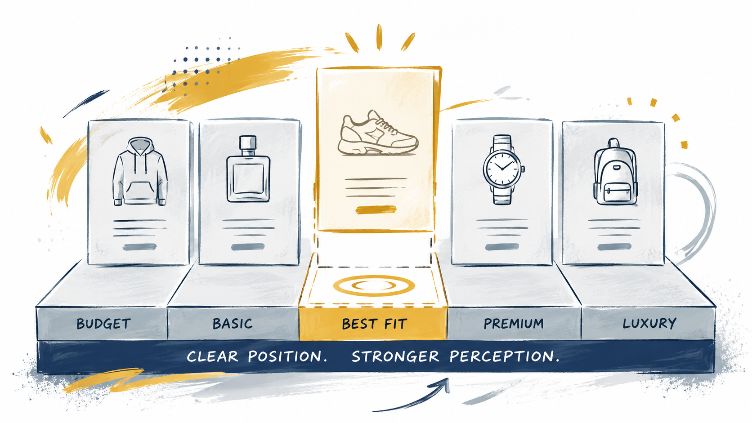
Branding creates recognition and positioning gives that recognition direction. A business can be remembered and still be misunderstood. People might recognise the name, like parts of the message, or see value in the offer, but still struggle to place the brand clearly in their mind.
That is where positioning does its work. It defines what the business wants to be known for, who it is most relevant to, and why the offer deserves attention. Without this clarity, even strong branding can lose commercial value. The brand may look polished, but the message feels harder to act on.
Clearer positioning gives the website stronger logic, gives content a clearer role, and helps potential customers reach the right conclusion with less effort
Make sure the market reaches the right conclusion.
Branding and positioning should make the business easier to understand, not just easier to recognise. People will form an opinion from the signals in front of them. If those signals are unclear, the business may be judged on assumptions it never meant to create.
That is why positioning needs to be intentional. It helps people understand what the brand stands for, where the offer fits, and why it should be trusted. If people are not reaching the right conclusion about your brand, the issue may not be the offer itself. It may be clearer positioning.
Need help defining how your brand should be understood? Get in touch with VAMS to discuss your positioning, messaging, and digital strategy.
Frequently asked questions about branding and positioning.
Branding and positioning shape how people understand a business before they speak to you. These answers clarify the strategic thinking behind that perception.
What is the difference between branding and positioning?
Branding is how a business becomes recognisable. It includes the identity, voice, and associations people connect with it. Positioning is more specific. It defines where the business sits in the market, who it is for, and why people should choose it instead of another option.
How does brand positioning impact business growth?
Brand positioning supports growth by making the business easier to understand and easier to choose. It helps the right people see why the offer matters, where it fits, and why it deserves attention. Without that clarity, marketing can attract interest but still struggle to convert it into action.
How does brand perception influence customer decisions?
Brand perception influences what customers expect before they compare the details. If a brand feels credible and relevant, people are more likely to trust the offer. If it feels unclear, they may question the value before the business has had a proper chance to explain itself.
What are the signs that a business has weak positioning?
Weak positioning often shows up as mixed messages. The website feels hard to understand, services are difficult to place, and content says different things across different pages. Prospects may like the business but still struggle to explain why it is the right choice.
How can a brand messaging framework improve positioning?
A brand messaging framework turns positioning into language people can use consistently. It clarifies what the brand should say, who it should speak to, and which points deserve emphasis. That helps the website, content, and sales conversations reinforce the same market position instead of pulling in different directions.