

Key takeaways.
- Strong website design structure helps visitors understand where they are, what the business offers, and why it is relevant.
- Clear cues reduce the effort needed to move through a site, especially when visitors arrive without prior context.
- Website hierarchy affects how people read the offer, so page order, navigation, and content flow need deliberate decisions.
- Positioning gives the website a clearer logic, helping teams decide what should lead, what should support the message, and what can sit deeper in the journey.
- At VAMS, we connect positioning, website planning, content architecture, and search direction so your digital presence works as a joined-up system.
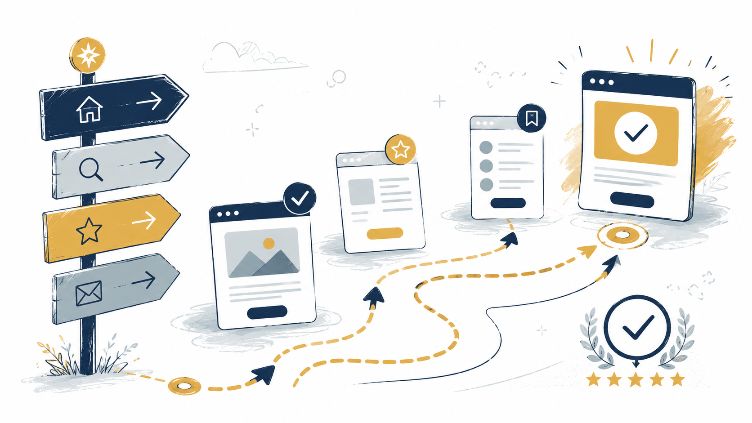
A familiar supermarket feels easy because shoppers already understand the route. Good website design structure has to create that same sense of direction for people who arrive without context.
That is where many websites fall short. Visitors do not know the business from the inside. They do not know which service matters most, how pages connect, or where the most useful proof sits.
They judge what they see first. If the website does not make the offer clear quickly enough, attention starts to slip before the brand has had a proper chance to make sense.
Clearer cues reduce the guesswork.
People make faster sense of a space when the route is easy to read. Supermarkets do this through visible categories, aisle markers, product groupings, and shelf placement.
Some of that is operational. Some of it affects attention. In one supermarket experiment on potato chips, researchers found that shelf height influenced purchase behaviour, with the middle shelf performing strongest among the placements tested.
The same principle applies to a website, but the margin for confusion is smaller. A visitor is judging the page title, menu wording, content order, proof, and next step almost immediately. Weak cues create extra work. Clear cues help visitors understand the page they are on, how it connects to the wider offer, and whether it is worth continuing.
Website hierarchy changes how people understand the offer.
Every website gives certain messages more weight than others. The top-level navigation, first screen, page order, and amount of space given to each service all suggest priority. Visitors read those choices as signals, even when the business has not made them deliberately.
This is where websites often become messy without anyone noticing. A new page gets added for a service launch. An old page survives because removing it feels risky. A menu label comes from internal language rather than customer understanding.
The result is not always obvious at first. The site still works, but it starts carrying the business’s internal timeline instead of a clear route for the visitor.
That is why website hierarchy needs active decisions. If the order is left to happen by default, the website may end up emphasising the wrong message, the wrong service, or the wrong next step.

Visitors will not search for clarity.
A shopper inside a supermarket has already crossed a small threshold. They are in the building, moving through the aisles, and likely still motivated to find what they came for. A website visitor can exit with almost no friction. If the offer is hard to understand, the next option is already open in another tab or waiting in the search results.
This is why key information needs to appear early enough to support the decision. Not everything belongs at the top of the page, but the visitor should quickly understand the offer, the relevance, and the reason to continue.
Nielsen Norman Group has found that users often leave web pages within 10 to 20 seconds, although clear value propositions can hold attention for longer. Strong website design structure respects that behaviour. It gives visitors enough clarity before they lose interest, without forcing every detail into the first screen.
Positioning turns content into a clearer path.
A website cannot create clarity if the brand has not decided what it needs to be known for. Before the page plan takes shape, the business needs a sharper view of its audience, offer, and proof. Otherwise, the website becomes a container for whatever content already exists.
That is usually where the structure starts to weaken. Service descriptions, old pages, SEO ideas, and stakeholder input all compete for space without a clear reason to lead or support.
Strong brand positioning and messaging gives the website a more useful filter. It helps the team decide what should introduce the business, what should build confidence, and what belongs deeper in the journey.
This is where design structure becomes more than layout. It turns positioning into something visitors can understand, follow, and act on.
Search visibility improves when the site has logic.
Search performance is rarely about one page doing all the work. Google’s guidance focuses on helpful, reliable, people-first content, but that content still needs a clear place in the wider site. Pages should not sit as isolated answers. They need to connect back to the services, topics, and expertise the business wants to be known for.
This becomes even more important as search becomes more answer-led. Google says AI Overviews help people get the gist of complex topics more quickly and explore links for more information. Weak source material makes that harder, especially when the site does not clearly explain how its ideas fit together.
This is where SEO, GEO, and AI search direction becomes part of the same strategic conversation as website planning. The goal is not to write for search systems instead of people. It is to build a site that makes sense to both.
Better digital performance starts with strategic direction.
The supermarket comparison is useful because it makes one thing easier to see: people depend on the environment in front of them.
A website should turn the brand’s thinking into a route visitors can understand, so the offer is easier to assess and the next step feels natural. That depends on choices made before the page design is finalised. The brand needs to know what should lead, what should support the message, and what can sit further into the journey.
At VAMS, we help ambitious brands bring that strategic layer into their digital presence. That can include positioning, website planning, content architecture, and search direction, depending on what the project needs.
If your website has grown without that level of direction, it may be time to rebuild the thinking behind it. Get in touch to discuss your positioning, website, and content strategy.
Frequently asked questions about website design structure.
Here are the key things to know about website design structure before planning, redesigning, or expanding your site.
What is website design structure?
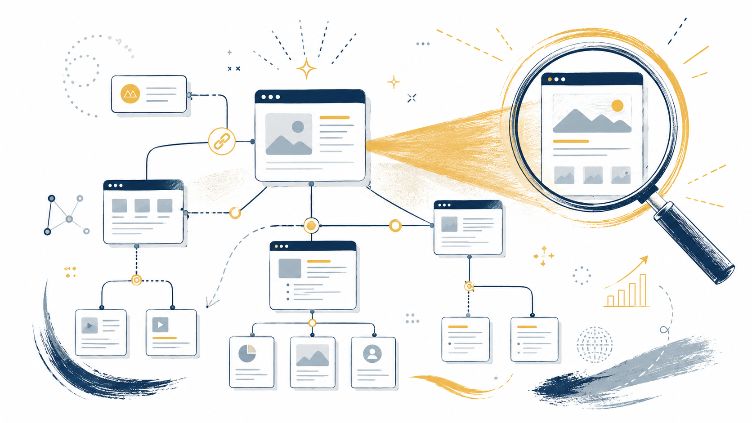
Website design structure is the way a site organises its pages, messages, navigation, and content flow. It helps visitors understand the offer, find the right information, and know what to do next. Strong structure makes the site easier to use, easier to scale, and clearer for search systems too.
Why is website design structure important for conversions?
Website design structure affects conversions because people need clarity before they act. If visitors can understand the offer, find the right proof, and see a natural next step, they have fewer reasons to leave. A stronger structure reduces hesitation and makes the path to enquiry easier to follow.
How does brand positioning affect website structure?
Brand positioning gives website structure a clear order. It defines what the business should be known for, who the message needs to reach, and which proof matters most. That makes it easier to decide which pages lead, how services are grouped, and where key information should sit.
What are the signs that a website has poor structure?
Poor website structure usually means the site has pages, but no clear logic connecting them. Visitors may find information but still struggle to understand the offer, compare services, or choose the next step. Internally, teams often feel the same problem when adding content starts making the site harder to manage.
How does website structure affect SEO and AI search visibility?
Website structure helps search systems understand how your pages, services, and topics connect. That matters for traditional SEO and AI-led discovery because isolated content is harder to interpret. A clear structure gives important ideas a proper place, supports internal linking, and makes the site easier to understand.