

Marketers and brands have been using email marketing for decades – with good reason! It’s one of the most low-cost ways for brands to connect with customers, prospects, and leads on a mass scale. But is email marketing still effective? Does email marketing increase sales in this day and age? If you want to know the answers to these burning questions, then read on.

A brief history of business email marketing
You’ve probably never wondered who came up with email marketing. But in case you need a fun tidbit for your next trivia night, it was a man named Gary Thuerk. He is also known as the Father of Spam. In 1978, Gary was a Marketing Manager at Digital Equipment Corp, when he decided to send a mass email to 397 email accounts found on the ARPAnet (Advanced Research Projects Agency Network) of the US Defense Department. His goal? To invite recipients to a product demo of their new computer range. With that single unsolicited email, he unwittingly ushered in the era of email marketing.
Despite his less-than-flattering moniker, Gary’s decision to spam nearly 397 email accounts earned the company an impressive $12 million in sales. While this might not be a typical example of email marketing success, it was a clear sign that business email marketing could be a powerful tool.
But today, email is a very different game than it was in 1978. Most people’s emails are filled to the brim with promotional messages, newsletters, and marketing messaging of all kinds. Some solicited, some not – but all of them vying for attention among the hundreds of other emails.
So, is email marketing still effective in its current state? We say yes, absolutely! And we’re going to explain why with some statistics to back it up.

Is email marketing still relevant?
Over the years, email marketing has transformed from broad email blasts, akin to throwing spaghetti on the wall, to targeted, personalised messages. Technology advancements, regulatory changes, and a growing understanding of customer psychology have all had a part to play in this.
But the critical question remains, is email marketing still effective? Surely with so many emails being sent, it’s becoming more and more difficult to stand out? The answer is that email marketing still works – with the caveat that you need to do it right. Before we get into the nitty-gritty of how to do it well, let’s look at some cold hard email marketing statistics to back up our claims.

Email marketing statistics
Here are some eye-popping statistics on email marketing:
- 4 billion daily email users exist worldwide, a figure expected to increase to 4.6 billion by 2025.
- Over 306 billion emails are sent and received each day around the world.
- 99% of email users check their inbox daily, with some individuals checking up to 20 times a day. In fact, 58% of consumers start their day by checking email.
- Email marketing open rates vary across industries, with the average open rate hovering around 21%.
- Average email click-through rates are 3.57%, which is significantly higher than Facebook (0.07%) and Twitter (0.03%).
- 50% of all media planners were leveraging email marketing in 2021, with a further 22% planning to do the same that year.
- 64% of small businesses connect with their customers through email marketing.
- Email marketing boasts an average return rate of $40 per $1 spent. This is higher than SEO, keyword ads, banner ads, and mobile.
- More money is being allocated to email marketing than ever, with 37% of brands increasing their budget in 2021 and only 1.3% making cuts.
- By the end of 2023, global email marketing revenue could reach nearly $11 billion.
- In 2021, 77% of marketers experienced an uptick in email engagement.
- 29% of marketers say that email is their most effective marketing channel.
What does this email marketing data mean?
We can draw a few conclusions from the statistics above. Firstly, it’s clear that email marketing is still a powerful and effective tool for marketers. Email remains one of the highest ROI-generating channels available today with huge potential profits to be had if done well. It also highlights that more marketers are allocating larger budgets to email marketing than ever before. Open rates are still strong, hitting social media platforms out of the ballpark.
How does this translate into a real-life marketing scenario? How does email marketing help increase sales? Suppose you run a business with 10,000 email subscribers, 10,000 Facebook followers, and 10,000 Twitter followers. If you launch a campaign on each channel, here’s what to expect based on average click-through rates:
From your email campaign, with a 3.57% CTR, you would engage about 357 potential customers. However, your social media efforts on Facebook (0.07% CTR) and Twitter (0.03% CTR) would only net you about 7 and 3 engagements respectively, totaling 10 potential customers. This means, with equal audience sizes, your email campaign could potentially engage over 35 times more customers than your combined social media efforts. Pretty compelling figures!

How can you use email marketing effectively?
Using email marketing effectively in 2023 boils down to catching attention and holding it. This begins with the subject line and preheader (the snippet of text that appears beneath the subject line). It then continues through your email content’s design and message. Here are some tips for improving your business email marketing.
Personalisation is everything
This can’t be emphasised enough and it doesn’t only apply to email marketing. Studies show that around 80% of consumers are more likely to make a purchase from brands that deliver personalised experiences. However, personalising channels such as social media and paid ads is not easy. This is what makes email so appealing. But personalisation goes beyond simply using the recipient’s name. You can personalise emails by segmenting your list based on different criteria such as demographics, location, interests, and purchase history.
Timing is key
Different times of the day and different days of the week will produce different results. You want to make sure your emails are sent at the right time to get the best response. You can use analytics to determine when most of your customers open and click emails, so you know the best time to send them. But there are also some general rules to follow. For example, most people are checking their emails in the morning and evening. As such, these are good times to send out emails. 10 am has been found to have particularly good open rates.
Optimize the preheader
The preheader serves as a brief summary that complements your subject line. It’s the second thing recipients see and could be the difference between an opened email and a skipped one. With a few impactful words, let your audience know what to expect and why they should care. Make sure your preheader extends the story of your subject line without merely duplicating it. Email marketing copywriting requires careful attention to these small details.
Keep it succinct
Email is a rapid-fire platform. Users often skim, rather than fully read emails. So, focus on getting your point across swiftly. Concentrate on clarity and brevity. Chop down long sentences and remove anything superfluous. Try bullet points or numbered lists for easy readability. All in all, get to the point and get there quickly.
Text-based vs. graphic emails
Emails don’t always have to be flashy. Sometimes, a simple text email might be more effective. It can feel more personal, like a note from a friend, rather than a company broadcast. Experiment with both types to see which one gets better results. A good balance between text and visuals could be your sweet spot.
Hire professional email copywriters
Good email marketing isn’t just about the information you’re delivering. It’s also about how you’re delivering it. This is where professional email copywriting services from an email copywriting agency can really make a difference. They have the knack for shaping your messages in a way that speaks directly to your audience. This will help pique their interest and compel them to take action. It’s not just about proper grammar and punctuation; it’s about effective communication.
Send from a real person
Nobody likes to feel like they’re talking to a robot. Sending your emails from a “Do Not Reply” address is impersonal. If possible, send your emails from a named individual in your organisation. It can be the CEO, the head of marketing, or any other relevant person. This humanises your brand and makes your communications feel more
personal.
Create engaging subject lines
Subject lines are the gatekeepers of your email campaigns. If they don’t entice the reader to click, the best content in the world won’t matter. So, create subject lines that are relevant, interesting, and enticing. Think about what matters to your audience and use that as a starting point. But remember to keep it short and sweet. Specialist email marketing services providers advise under 50 characters as a good rule of thumb.
Email new contacts promptly
Striking while the iron is hot can be the key to converting a new contact into a customer. If someone has just given you their email address, they’re likely interested in what you’re offering. Don’t let them cool off. Try to get in touch within 24 hours while your brand is still fresh in their mind.
Test, analyse, and improve
Consistent testing and analysis are your allies in the quest for effective email marketing and email campaign copywriting. Experiment with subject lines, email layouts, call-to-action placements, copy content, send times, personalization techniques, and more. After each campaign, delve into the data. What worked? What didn’t? Use A/B testing to fine-tune your approach based on real-world feedback. Remember, email marketing is not a one-size-fits-all deal. It’s a dynamic process that needs regular refining to keep pace with your evolving audience.
Stay up-to-date with privacy laws
Don’t underestimate the importance of data privacy. Laws have tightened in recent years, particularly in the UK and EU, and breaching them can lead to hefty fines. Make sure you’re fully informed about regulations like the GDPR and PECR. It’s about respecting your recipients and their right to privacy, as well as avoiding any legal issues.

Types of email marketing campaigns
Part of getting your email marketing strategy right is choosing the right type of campaign for your objectives. This could be a one-off promotional email, or it could be more complex. Ask yourself, “What do I want to achieve?”. There are a few types of email campaigns you can use to keep your recipients engaged. These include the ones we list below.
Newsletters
Newsletters are regular emails sent to your subscribers to keep them updated about the latest developments in your company. This can include product updates, company news, blog posts, upcoming events, and more. They’re a fantastic way to engage with your audience consistently and foster a long-term relationship.
Promotional emails
Promotional emails are sent to highlight specific offers, deals, or new products/ services. These are typically time-bound and aimed at driving immediate action such as purchases, sign-ups, or event registration. It’s crucial to balance these promotional messages with your other content to avoid overwhelming your audience with sales pitches.

Welcome emails
Welcome emails are the first interaction a new subscriber has with your brand. They typically generate a higher engagement rate. They can include a warm message, an overview of what the subscriber can expect, and possibly a special offer as a thank-you for signing up.
Transactional emails
Transactional emails are triggered by specific actions taken by a user. This could include order confirmations, shipping notifications, password resets, and feedback requests. Although they’re often automated and functional, don’t overlook their potential for additional engagement or upselling.
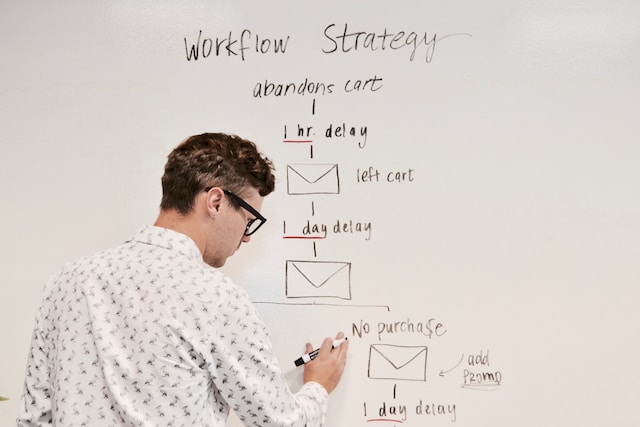
Re-engagement emails
Re-engagement emails are targeted at subscribers who haven’t interacted with your brand for a while. They are a chance to win back their interest with a personalised message or a special offer. If a subscriber continues to be inactive, it might be time to clean up your email list and remove them.
Educational emails
Educational emails provide valuable information or teach your subscribers something new. These might include how-to guides, webinars, industry news, or tips and tricks. They can help position your brand as a trusted expert in your field.
Successful email marketing examples
If you’re stuck for ideas on how to make your email marketing campaign stand out, take a look at what’s already working. Here are a few successful email marketing examples from some of the world’s renowned brands.
Ryanair
Known for its irreverent yet effective marketing campaigns, Ryanair knows that its key selling point is affordability. Their email campaigns focus on this, with discounts and bargains in every message. They also create a sense of urgency by emphasising the limited time left before their customers can avail of their discount offer.

New Look
High-street fashion giant New Look knows it must compete with hyper-cheap online retailers to hold on to its customer base. Its email campaigns are designed to catch attention with discount codes and new arrivals.

Olaplex
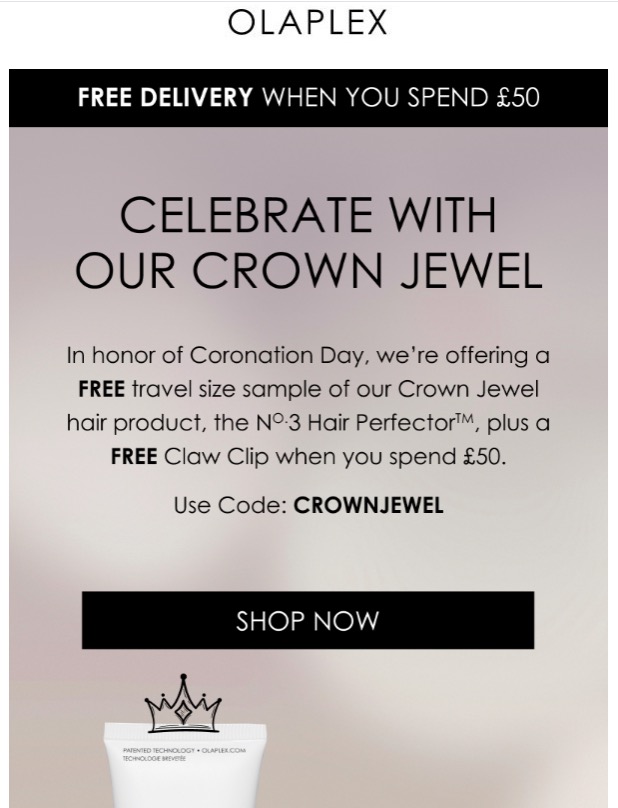
High-end hair product company Olaplex capitalised on the coronation to send this timely discount code. Fitting perfectly with its luxurious brand image, this email lured customers in with the promise of several free gifts when customers purchased over £50 worth of products.
The verdict
So, is email marketing still effective in 2023? Our answer is a resounding yes. Despite the inundation of marketing messages that fill inboxes daily, email marketing remains a powerful and cost-effective tool for reaching your customers directly and forging meaningful connections.
The numbers don’t lie. With an average ROI of $40 per $1 spent, high engagement rates compared to social media platforms, and the ability to personalise content like no other channel, email marketing continues to be a critical strategy for businesses of all sizes.
However, it’s essential to note that successful email marketing in the current climate requires more than just sending emails. Competition for attention is far higher than it was a decade ago. Additionally, consumers’ expectations for personalisation are at an all-time high. If you’re not sure where to start, it might be time to hire an email copywriting agency. At VAMS, our experienced team of email copywriters are on hand to help you write your next winning email campaign. Get in touch to find out more.
FAQs
Here are some of the most frequently asked questions about the effectiveness of email marketing today.
Is email marketing still effective?
Absolutely, email marketing remains one of the most effective marketing strategies today. Despite the rise of social media and other digital marketing channels, the personal, direct nature of email, coupled with its high ROI and engagement rates, keeps it a vital part of any business’s marketing toolkit.
How does email marketing help increase sales?
Email marketing plays a crucial role in nurturing leads and encouraging repeat purchases. With personalised content and targeted promotions, businesses can connect directly with customers and build trust and loyalty. This engagement not only increases conversions but also encourages customer retention, leading to more sales in the long run.
Why is email marketing important for small businesses?
Email marketing is a cost-effective way for small businesses to reach a large number of potential customers directly. It allows for personalisation, tracking, and analysing in a way that few other marketing channels can match. Also, it’s highly scalable, meaning small businesses can start small and grow their strategies as they expand.
What do your email marketing copywriting services consist of?
We offer a comprehensive suite of email copywriting services. This includes creating engaging subject lines, compelling body content, persuasive call-to-actions, and everything in between. Our professional email copywriters are experienced in the art of successful, revenue-driving email sequence copywriting and email campaign copywriting. We’ll take the time to create a winning email campaign for your brand. To learn more about our email copywriting services, don’t hesitate to get in touch.