

We can’t escape the constant discussion of AI and whether or not it’s acceptable to use this new technology for creative tasks such as copywriting and article writing. But what many people don’t realise is that if you’ve ever used spell checking tools such as Grammarly or similar, then your work has already been touched by AI. From generating content to correcting simple spelling errors, AI writing software seems to promise perfection. However, while these AI proofreading tools can be handy, they can’t always capture the nuances of the English language the way human proofreaders and editors can.
There’s a big difference between using an AI writing editor and seeking proofreading help from real professionals. Can AI replace human writers? It’s certainly an impressive technology. But when it comes to document proofing and copy editing, there’s a strong argument in favour of professional editing and proofreading services. In this blog post, we’ll explain how and why AI writing and proofreading tools might fall short. We’ll also go in-depth on the benefits of human proofreading services.
What are the limitations of AI proofreading tools?
The main limitation of AI proofreading tools is that the software can only spot errors if they fit certain parameters. By their nature, they follow strict rules dictated by an algorithm. Anything that veers outside the algorithm’s parameters may not be handled correctly. Below are some of the issues that AI proofreading tools may struggle with.
False positives and overcorrections
AI proofreading tools, while aiming for perfection, often find themselves in the trap of overcorrection. You might write a sentence with a certain rhythm or stylistic choice, only for an AI writing editor to suggest a “better” alternative. While the tool’s intention might be to enhance clarity, it could inadvertently alter the original tone or writer’s intention.
It’s like asking a machine to try to fine-tune a piece of art without understanding the artist’s emotional investment. This is where human proofreading help is invaluable. Professional proofreaders and editors can interpret the nuances of a text in a way that machines just can’t.
Overstandardization of voice
Each writer has a unique voice and style. One major limitation of AI proofreading tools is that they tend to standardise writing. By always suggesting the “most correct” grammar or structure, they might strip away the writer’s unique voice, making pieces sound uniform and potentially bland. Human proofreaders and editors, on the other hand, can correct while still capturing that individuality. This purposefully leaves the author’s voice vibrant and untouched.
Not understanding the target audience
Tweaking content for a specific audience is a skill that human proofreaders and editors excel in. Whether the target is teenagers with their evolving slang, professionals with industry jargon, or academics with specialised terminology, human editing and proofreading can adjust the tone and style to match.
AI proofreading tools, despite their advancements, often fall short in this area. Their algorithms are primarily designed for standard English and may not pick up on jargon, slang, or colloquialisms. These elements could be appropriate for a specific audience but considered “incorrect” in standard English.
Handling ambiguity and wordplay
The English language is filled with homonyms, puns, and intentional ambiguities that can be used for comedic or dramatic effect. AI proofreading tools might misinterpret these as errors and suggest unnecessary changes. This can dilute the intended impact of the text or even make it seem clumsy and awkward.
A human proofreader or editor, however, can interpret the intent of the author and leave these elements intact. They understand that certain words are meant to evoke a certain reaction from readers and therefore should remain as is.
Overreliance can hamper skill development
Using AI proofreading tools as a crutch can limit a writer’s growth. By always depending on AI suggestions without understanding the reasoning behind them, writers might not develop a strong grasp of language mechanics, style, and other nuances.
As any English teacher will tell you, practice and familiarity with the language are essential for improving writing skills. If all errors are simply corrected by a robot, writers will not get the opportunity to learn from their mistakes and grow.
Lack of specialised knowledge
Certain areas of writing like technical writing or medical writing require specialised knowledge or industry-specific jargon that isn’t widely used. AI proofreaders are often unable to recognise such terms and will issue false corrections. This could lead to misunderstandings or even mistakes in the final product. It’s disheartening to see your page light up with red flags when you know that half of them are meaningless.
A human proofreading expert who has a good understanding of the domain can spot actual mistakes quickly. They’ll make sure that your document remains accurate and error-free. They can also go even deeper and cross-check your referencing, formatting, and other factors to ensure that your text meets the standards of your industry.
Missing glaring errors
This one might seem surprising, but many of those who rely on AI proofreading tools have been left with embarrassing typos and other errors in their files.
Grammar-checking algorithms are improving all the time, but they still lack the ability to catch complex sentence structures or contextual meaning. They might suggest the wrong verb tense or overlook missing words that change the meaning of a sentence. This is even more likely if you’re writing on a niche subject.
Limited to copy editing
There are many different types of editing. If you’re writing a novel, you may hire a developmental editor early on to help you develop the structure, flow and plot. Once you’ve written your first draft, a human editor can perform an overall evaluation and offer valuable feedback on how to make the book better. Meanwhile, content editing will focus on ensuring that your content is clear and well-written, while line editing makes sure every sentence is as effective as possible.
The strength of AI proofreading tools lies in their ability to do copy editing, which focuses on eliminating mistakes and typos from a document. However, typically they can’t tell if your overall structure flows well, your plot makes sense or your writing style fits the tone you’re trying to create. Only a professional editor can do that.

The irreplaceable value of human proofreading
Human proofreaders don’t need to panic yet – they still have a valuable role to play. In fact, the role of human proofreading is even more important in an age when AI tools are available at our fingertips. Here are some of the ways hiring professional proofreading services can benefit your work.
Personalised and contextualised feedback
Writing is deeply personal to the writer – and a human editor can understand that. They go beyond just looking for typos; they connect with the writer’s intent, emotions, and vision. No AI writing software or tool can replicate this deep understanding.
Emotional intelligence in editing
While AI writing editors can technically “read” words, they cannot “feel” them. Human proofreaders can understand the emotions you’re trying to convey, whether it’s the suspense in a thriller novel or the humour in a casual blog post. They can make sure that the writing’s emotional depth remains intact after editing.
Adapting to evolving language
The English language is constantly evolving. New slang, terms, and expressions come up regularly. Human editors are in tune with the trends – language is their bread and butter after all – while AI editors may not be aware of the subtleties. Can AI writing tools accurately judge if your sentence sounds natural to your audience? Are the colloquialisms culturally accurate for your target audience? Human editors are the only ones who can make these nuanced decisions with certainty.
Expertise in niche areas
Writers often specialise in niche areas – from academic writing to sci-fi novels. Human proofreaders with expertise in these niches can provide invaluable insights and corrections that generic AI proofreading tools might overlook. Looking for a world-building expert to review a fantasy novel? Or a quantum physics expert for your scientific paper? There’s a human editor for every genre and field.
Ensuring cultural sensitivity
AI writing software usually follows universal grammar and style rules. In contrast, human editors are aware of cultural nuances and can edit content to be sensitive and appropriate for diverse audiences. Localising content for different countries and cultures requires a human touch to ensure accuracy and effectiveness. Human editors can provide input on changes that may be necessary. This includes adjusting the tone of voice to suit the target audience or substituting culturally-specific phrases with ones better suited for the local region.
Preserving the author’s voice
One significant advantage of human proofreading services is the ability to preserve the author’s voice. While AI proofreading might homogenise content, a human editor can make choices that preserve the author’s message and tone.
Future of proofreading: humans & AI together?
Will proofreaders be replaced by AI? We don’t think so, but that doesn’t mean these two tools shouldn’t work together. AI proofreading tools can quickly scan documents for errors and identify potential grammar issues. On the other hand, human proofreaders and editors can dive deeper into the document and make more complex decisions that capture the intended message and style. The combination of both helps create high-quality content that’s accurate, grammatically sound, culturally sensitive, and true to the author’s voice.
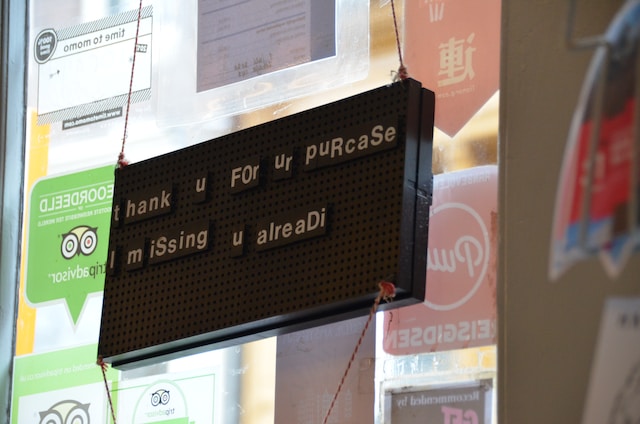
Errors missed by AI spell checkers but caught by human proofreaders and editors
As we’ve pointed out already, AI proofreaders mainly falter when it comes to style, tone and nuance. But even when looking for grammatical errors, they often miss obvious mistakes. We’ve put together a few examples of errors that were missed by Grammarly. You can try this yourself if you want. Just copy and paste the examples below into Grammarly’s proofreader and you can see for yourself!
Example 1:
“She took the reigns of the project and led it to success.”
Errors:
“reigns” should be “reins”. “Reigns” refers to ruling, while “reins” refers to control. Full disclosure – this error was actually picked up by the Microsoft Word spell checker, but not Grammarly.
Example 2:
“He wanted to ensure that the statue was erected in the park, and so he ensured it for a large sum.”
Errors:
In this case, “ensured” should be “insured”. While both words relate to making certain, “insure” typically refers to paying for insurance, while “ensure” means to guarantee.
Example 3:
“They’re going to try and do better next time.”
Errors:
“try and” is colloquially accepted but not grammatically correct. It should be “try to”. Of course, if you want to use colloquial language, that’s up to you, but it should be done with intentionality. If you’re aiming for a professional tone, you’ll need a human eye to pick up on something like this.
Example 4:
“Me and him are going to the park later.”
Errors:
“Me and him” should be “He and I”. This is one that people often mix up. If you’re referring to the subject of the sentence then “He and I” is the correct term. If you’re referring to the object of the sentence, for example, “Are you going to come to the movies with me and him?”, then “me and him” is correct. You’ll need a human to distinguish between the two cases.
Example 5:
“Between you and I, this is the best pie I’ve ever tasted.”
Errors:
“Between you and I” should be “Between you and me”. This is another confusing one. People often overcorrect and write “Between you and I” because it sounds more correct, but it’s actually incorrect. It should be “Between you and me” in this context because it refers to the object of the sentence. A human proofreader or editor can make sure that you get these tricky ones right every time.
Example 6:
“He poured over the book for hours.”
Errors:
“poured” should be “pored”. Surprisingly, Grammarly doesn’t seem to recognise the word “pored” at all.
Hire human proofreading experts
AI writing tools have their place, but they don’t get everything right. Often, you need a real person to make sure your writing sounds like you. At VAMS, our professional proofreading and editing team gets the little things that AI might miss. Want your words to hit just right? Let us give them a once-over. Get in touch with VAMS today and we’ll get your writing in perfect shape.
Frequently asked questions (FAQs)
Here are some of the most frequently asked questions on AI tools versus human proofreaders and editors.
How do AI writing tools work?
AI writing tools and AI writing editors use complex algorithms trained on vast amounts of text data. They suggest corrections or improvements based on patterns they’ve learned, but may not always capture unique voices or nuanced expressions like human editors can.
Will proofreaders be replaced by AI?
We don’t think so! While AI proofreading tools are excellent for quickly scanning documents for basic errors, they currently lack the nuanced understanding, emotional intelligence, and contextual awareness that human proofreaders and editors bring to the table. The complexity of language, cultural references, tone, and writer’s intention are elements that AI struggles with. For these reasons, it’s unlikely that human proofreaders will be entirely replaced by AI any time soon.
Are copy editing and proofreading the same thing?
While they overlap, copy editing often focuses on clarity, coherence, and overall readability. Proofreading, on the other hand, primarily targets grammar, punctuation, and spelling errors. Both are important steps in the writing process to make sure your content is polished and ready for publishing.
Will I lose my personal writing style if I use proofreading services?
Not at all! At VAMS, our goal is to enhance and refine your work while preserving your unique voice and style. Unlike some AI writing tools that may standardise content, our human proofreaders and editors prioritise maintaining the author’s original tone and intention.